Jul 2, 2026
AI Agent vs BDC: Best Options for Car Dealerships (2026)
AI Agent vs BDC: Best Options for Car Dealerships (2026)
AI Agent vs BDC: Best Options for Car Dealerships (2026)
Introduction
Every dealership has the same phone problem. Calls come in all day. Some get answered well. Some get answered badly. A lot never get answered at all.
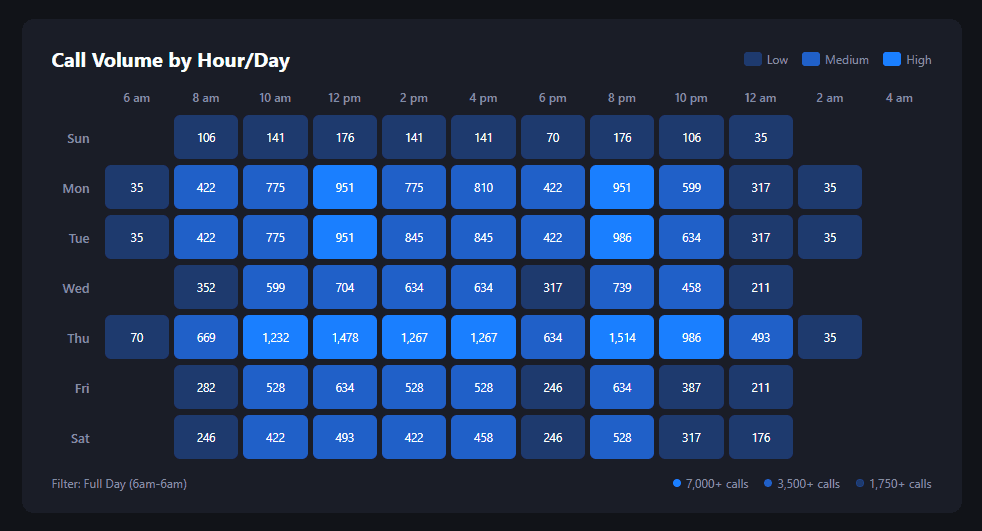
The BDC was supposed to fix this. For many stores it did, partly. But BDCs are expensive, hard to staff, and the quality swings with whoever is on shift. So now every GM is hearing the same pitch: replace your BDC with AI.
Some of that pitch is real. Some of it is noise. This is the honest version, with numbers.
What a BDC actually costs you
A functioning BDC for a mid-size store runs 3 to 6 people. Salaries, training, turnover, management time. Most stores land somewhere between $15K and $40K a month all-in, and the turnover problem never goes away. You train someone for three months and they leave in eight.
And even a good BDC has hard limits:
It works business hours. Half your calls don't.
Peak hours mean hold times and voicemail. Voicemail means lost deals.
Quality depends on who picked up. Your best BDC rep and your newest hire are not the same phone call.
Most BDCs are scored on appointment volume, not appointment quality. Booked calendars full of no-shows look great on Monday and close nothing.
None of this is a people problem. It's a coverage and consistency problem. You cannot staff your way to answering 100% of calls at the same quality, around the clock. The math doesn't work.
What an AI agent actually does differently
An AI phone agent answers every call. Not most calls. Every call, including 9pm Sunday when a customer is sitting on your website with a trade-in question.
The good ones do more than answer:
Diagnose the call. Is this a service booking, a sales lead, a parts question, a vendor? A dashboard warning light and a customer asking about financing an F-150 should never sit in the same queue.
Resolve it on the spot. Book the service appointment. Answer the inventory question. Take the recall call. The best systems resolve the majority of calls end to end without a human touching them.
Route what needs a human, with context. The right lead reaches the right rep immediately, with the full picture, instead of a sticky note that says "call back John about a truck."
Log everything to your CRM. Every call becomes structured data. No manual entry, no leads dying in someone's voicemail.
The real numbers from one rooftop
At Provincial Chrysler Dodge Jeep Ram in Ontario, an AI agent captured 1,160 calls in 30 days that would otherwise have gone to voicemail or been missed entirely.
50% were service inquiries
35% were sales opportunities
15% were B2B and general
83%+ were resolved end to end without a human having to stop what they were doing at the time. 57 closed deals came out of those calls, a 42% close rate on the opportunities, roughly $100K in monthly opportunity recovered. The GM's words: "What it did to my fixed ops department, I couldn't pay someone $100 an hour to do."
That's one store, one month. The point isn't that every store gets identical numbers. The point is that the calls were already coming in. The revenue was already there. It was leaking.
Want to see what your store is leaking? Run your numbers in the missed-call calculator — takes 60 secononds.
AI agent vs BDC: the honest comparison
Human BDC | AI Agent | |
|---|---|---|
Coverage | Business hours, minus breaks and holds | 24/7, every call |
Consistency | Depends who's on shift | Same quality every call |
Cost | $15K–$40K/month for a team | Typically $2K–$3.5K/month per rooftop |
Ramp time | Months of hiring and training | Days |
Turnover | Constant (every 4-6 months) | None |
Peak hours | Hold times and voicemail | No queue |
Judgment on complex deals | A great rep is still better | Hands off to your closer with context |
Not sure what the leak costs at your store? Run your numbers here. That last row matters. AI doesn't replace your best closer. It makes sure your best closer only spends time on calls worth closing. The realistic model for most stores isn't "fire the BDC." It's a much smaller human team working real opportunities while AI handles the volume, the after-hours, and the routing.
The question GMs should actually ask: will my staff use it?
Here's the thing nobody puts in the pitch deck. The number one reason dealership tools fail isn't the tool. It's that staff never use it.
Most AI phone products come with a new platform. A dashboard to check. An app to log into daily. An inbox someone has to monitor for escalations. That's a new job you're assigning to people who are already busy, and six months later the tool is shelf-ware and you're still paying for it.
So before you compare features, ask every vendor these questions:
Does my staff have to learn or log into anything? If yes, be honest about whether they will.
What integrations does it need? CRM, DMS, scheduler hookups mean IT tickets, setup weeks, and another system that breaks when a vendor changes something.
Who owns the call data? If your customer conversations live on a vendor's platform, you're renting your own data back. If you ever leave, does it leave with you?
What percentage of calls does it resolve without a human? "Answers calls" and "resolves calls" are different products. A system that captures the caller's info and dumps it in an inbox for follow-up is a fancier voicemail.
How fast is go-live, really? "A few weeks" usually means DMS integration, opcode mapping, and staff training. Ask what happens in week one.
The main AI phone tools for dealerships, compared honestly
Uobo Connect — full disclosure, this is us. Voice AI that answers, diagnoses, and routes every inbound sales, service, and parts call. No CRM, DMS, or phone system integration; live in 48 hours; no app or dashboard for staff. Resolves 83% of calls end to end, pushes structured leads to any CRM, and dealers own the data. Built for stores that want the phone handled without adding a platform anyone has to babysit.
Toma — AI agent focused on service scheduling. Built on top of your DMS, which means deeper scheduler ties but also DMS integration and a multi-week setup with training before go-live.
Pam — voice and SMS AI workforce. Broad feature set across reception, sales, and outbound. Runs on integrations with your CRM and scheduler, and staff work from Pam's platform and app day to day.
Numa — AI-native service platform with strong DMS integration. Service-first; staff monitor an inbox across service and sales, with advisors handling escalations.
Podium — chat-first platform that added voice. Strong at text and review management; complex calls route to a chat inbox for human follow-up.
Stella — AI receptionist focused on service appointment setting, with deep DMS and scheduler integration (CDK, Xtime, Reynolds, myKaarma). Multi-week setup; non-service calls transfer to staff.
None of these are bad products. They're different bets. The integration-heavy tools bet that plugging deeper into your DMS is worth the setup time and the dependency. We bet the opposite: that the fastest path to every call answered is not touching your stack at all, and that your call data should compound for your store, not a vendor's platform.
FAQ
Can AI fully replace a dealership BDC? For call answering, qualification, booking, and routing, yes, and it does those 24/7 at consistent quality. For complex negotiations and relationship selling, your people are still better, this is a people business at the end of the day. Great run stores use AI to handle volume with human team working real opportunities. The mix works very well. One alone is not efficient.
How much does an AI BDC cost compared to a human BDC? AI phone agents for dealerships typically run $2,000–$3,500+ per rooftop per month. A staffed BDC team typically costs 5–10x that once you count salaries, training, turnover, and management. Reminder: the goal is not to replace people, it is to empower people to crush it for you.
How long does it take to set up an AI phone agent? Depends entirely on the integration requirements. Tools built on your DMS or CRM take weeks plus staff training. Tools that skip integration like Uobo can be live in 24–48 hours.
What happens to the leads the AI takes? Good systems push structured lead data into your CRM automatically on every call, and route hot leads to the right salesperson or advisor in real time with context. Note: many tools require their own dashboard and or mobile apps that are required to handle incoming leads.
Is an outsourced BDC better than AI? Outsourced BDCs solve the staffing headache but keep the human limits: hours, hold times, inconsistency, and per-call costs. They also put your customer conversations in a third party's hands. AI solves coverage and consistency; outsourcing just relocates the same problem.
Will my staff have to learn new software? With most tools, yes, and that's where adoption dies. A few, including ours, run entirely on your existing phone line with nothing for staff to log into. Ask this question before any other.
What's Not So Great
Limited Choices: You can only choose from cars that Clutch owns. If they don't have what you want, you're out of luck.
No Price Competition: Since there's only one seller (Clutch), you can't shop around for better prices on the same car.
Want to hear it instead of reading about it? Call our demo line and listen to the agent handle a real conversation.
Introduction
Every dealership has the same phone problem. Calls come in all day. Some get answered well. Some get answered badly. A lot never get answered at all.
The BDC was supposed to fix this. For many stores it did, partly. But BDCs are expensive, hard to staff, and the quality swings with whoever is on shift. So now every GM is hearing the same pitch: replace your BDC with AI.
Some of that pitch is real. Some of it is noise. This is the honest version, with numbers.
What a BDC actually costs you
A functioning BDC for a mid-size store runs 3 to 6 people. Salaries, training, turnover, management time. Most stores land somewhere between $15K and $40K a month all-in, and the turnover problem never goes away. You train someone for three months and they leave in eight.
And even a good BDC has hard limits:
It works business hours. Half your calls don't.
Peak hours mean hold times and voicemail. Voicemail means lost deals.
Quality depends on who picked up. Your best BDC rep and your newest hire are not the same phone call.
Most BDCs are scored on appointment volume, not appointment quality. Booked calendars full of no-shows look great on Monday and close nothing.
None of this is a people problem. It's a coverage and consistency problem. You cannot staff your way to answering 100% of calls at the same quality, around the clock. The math doesn't work.
What an AI agent actually does differently
An AI phone agent answers every call. Not most calls. Every call, including 9pm Sunday when a customer is sitting on your website with a trade-in question.
The good ones do more than answer:
Diagnose the call. Is this a service booking, a sales lead, a parts question, a vendor? A dashboard warning light and a customer asking about financing an F-150 should never sit in the same queue.
Resolve it on the spot. Book the service appointment. Answer the inventory question. Take the recall call. The best systems resolve the majority of calls end to end without a human touching them.
Route what needs a human, with context. The right lead reaches the right rep immediately, with the full picture, instead of a sticky note that says "call back John about a truck."
Log everything to your CRM. Every call becomes structured data. No manual entry, no leads dying in someone's voicemail.
The real numbers from one rooftop
At Provincial Chrysler Dodge Jeep Ram in Ontario, an AI agent captured 1,160 calls in 30 days that would otherwise have gone to voicemail or been missed entirely.
50% were service inquiries
35% were sales opportunities
15% were B2B and general
83%+ were resolved end to end without a human having to stop what they were doing at the time. 57 closed deals came out of those calls, a 42% close rate on the opportunities, roughly $100K in monthly opportunity recovered. The GM's words: "What it did to my fixed ops department, I couldn't pay someone $100 an hour to do."
That's one store, one month. The point isn't that every store gets identical numbers. The point is that the calls were already coming in. The revenue was already there. It was leaking.
Want to see what your store is leaking? Run your numbers in the missed-call calculator — takes 60 secononds.
AI agent vs BDC: the honest comparison
Human BDC | AI Agent | |
|---|---|---|
Coverage | Business hours, minus breaks and holds | 24/7, every call |
Consistency | Depends who's on shift | Same quality every call |
Cost | $15K–$40K/month for a team | Typically $2K–$3.5K/month per rooftop |
Ramp time | Months of hiring and training | Days |
Turnover | Constant (every 4-6 months) | None |
Peak hours | Hold times and voicemail | No queue |
Judgment on complex deals | A great rep is still better | Hands off to your closer with context |
Not sure what the leak costs at your store? Run your numbers here. That last row matters. AI doesn't replace your best closer. It makes sure your best closer only spends time on calls worth closing. The realistic model for most stores isn't "fire the BDC." It's a much smaller human team working real opportunities while AI handles the volume, the after-hours, and the routing.
The question GMs should actually ask: will my staff use it?
Here's the thing nobody puts in the pitch deck. The number one reason dealership tools fail isn't the tool. It's that staff never use it.
Most AI phone products come with a new platform. A dashboard to check. An app to log into daily. An inbox someone has to monitor for escalations. That's a new job you're assigning to people who are already busy, and six months later the tool is shelf-ware and you're still paying for it.
So before you compare features, ask every vendor these questions:
Does my staff have to learn or log into anything? If yes, be honest about whether they will.
What integrations does it need? CRM, DMS, scheduler hookups mean IT tickets, setup weeks, and another system that breaks when a vendor changes something.
Who owns the call data? If your customer conversations live on a vendor's platform, you're renting your own data back. If you ever leave, does it leave with you?
What percentage of calls does it resolve without a human? "Answers calls" and "resolves calls" are different products. A system that captures the caller's info and dumps it in an inbox for follow-up is a fancier voicemail.
How fast is go-live, really? "A few weeks" usually means DMS integration, opcode mapping, and staff training. Ask what happens in week one.
The main AI phone tools for dealerships, compared honestly
Uobo Connect — full disclosure, this is us. Voice AI that answers, diagnoses, and routes every inbound sales, service, and parts call. No CRM, DMS, or phone system integration; live in 48 hours; no app or dashboard for staff. Resolves 83% of calls end to end, pushes structured leads to any CRM, and dealers own the data. Built for stores that want the phone handled without adding a platform anyone has to babysit.
Toma — AI agent focused on service scheduling. Built on top of your DMS, which means deeper scheduler ties but also DMS integration and a multi-week setup with training before go-live.
Pam — voice and SMS AI workforce. Broad feature set across reception, sales, and outbound. Runs on integrations with your CRM and scheduler, and staff work from Pam's platform and app day to day.
Numa — AI-native service platform with strong DMS integration. Service-first; staff monitor an inbox across service and sales, with advisors handling escalations.
Podium — chat-first platform that added voice. Strong at text and review management; complex calls route to a chat inbox for human follow-up.
Stella — AI receptionist focused on service appointment setting, with deep DMS and scheduler integration (CDK, Xtime, Reynolds, myKaarma). Multi-week setup; non-service calls transfer to staff.
None of these are bad products. They're different bets. The integration-heavy tools bet that plugging deeper into your DMS is worth the setup time and the dependency. We bet the opposite: that the fastest path to every call answered is not touching your stack at all, and that your call data should compound for your store, not a vendor's platform.
FAQ
Can AI fully replace a dealership BDC? For call answering, qualification, booking, and routing, yes, and it does those 24/7 at consistent quality. For complex negotiations and relationship selling, your people are still better, this is a people business at the end of the day. Great run stores use AI to handle volume with human team working real opportunities. The mix works very well. One alone is not efficient.
How much does an AI BDC cost compared to a human BDC? AI phone agents for dealerships typically run $2,000–$3,500+ per rooftop per month. A staffed BDC team typically costs 5–10x that once you count salaries, training, turnover, and management. Reminder: the goal is not to replace people, it is to empower people to crush it for you.
How long does it take to set up an AI phone agent? Depends entirely on the integration requirements. Tools built on your DMS or CRM take weeks plus staff training. Tools that skip integration like Uobo can be live in 24–48 hours.
What happens to the leads the AI takes? Good systems push structured lead data into your CRM automatically on every call, and route hot leads to the right salesperson or advisor in real time with context. Note: many tools require their own dashboard and or mobile apps that are required to handle incoming leads.
Is an outsourced BDC better than AI? Outsourced BDCs solve the staffing headache but keep the human limits: hours, hold times, inconsistency, and per-call costs. They also put your customer conversations in a third party's hands. AI solves coverage and consistency; outsourcing just relocates the same problem.
Will my staff have to learn new software? With most tools, yes, and that's where adoption dies. A few, including ours, run entirely on your existing phone line with nothing for staff to log into. Ask this question before any other.
What's Not So Great
Limited Choices: You can only choose from cars that Clutch owns. If they don't have what you want, you're out of luck.
No Price Competition: Since there's only one seller (Clutch), you can't shop around for better prices on the same car.
Want to hear it instead of reading about it? Call our demo line and listen to the agent handle a real conversation.
Our latest stories:

Jul 2, 2026
AI Agent vs BDC: Best Options for Car Dealerships (2026)
Nov 27, 2025
How does Clutch.ca work? Should You Use It?
Aug 6, 2025
No Carvana Does Not Operate in Canada, Try Uobo
See all posts